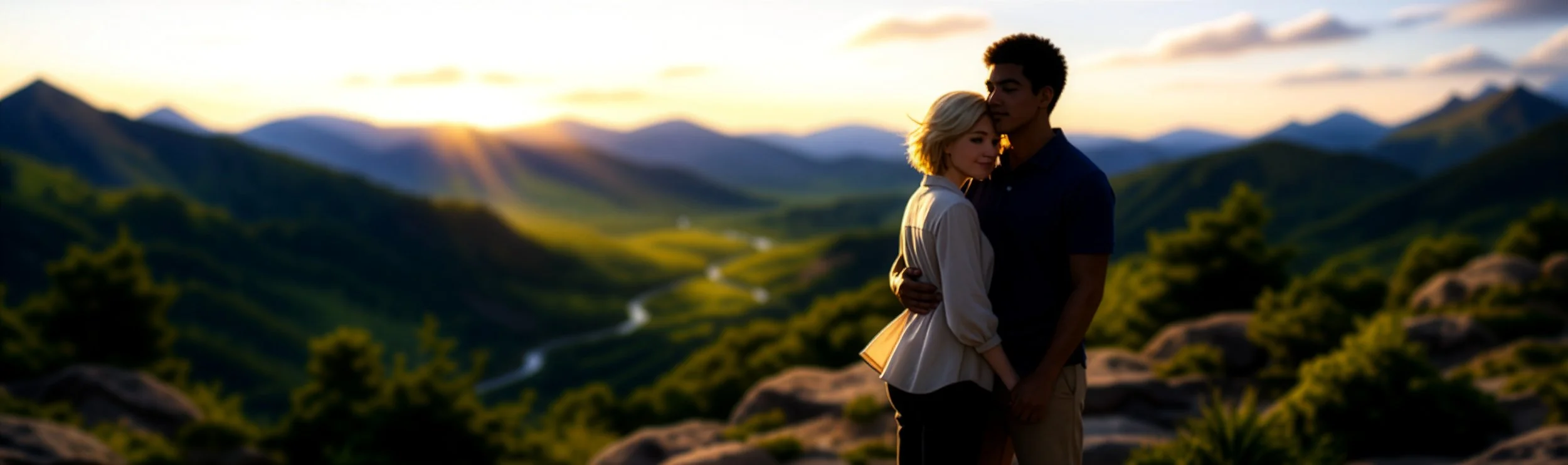
Coral in love (Hope at altitude)

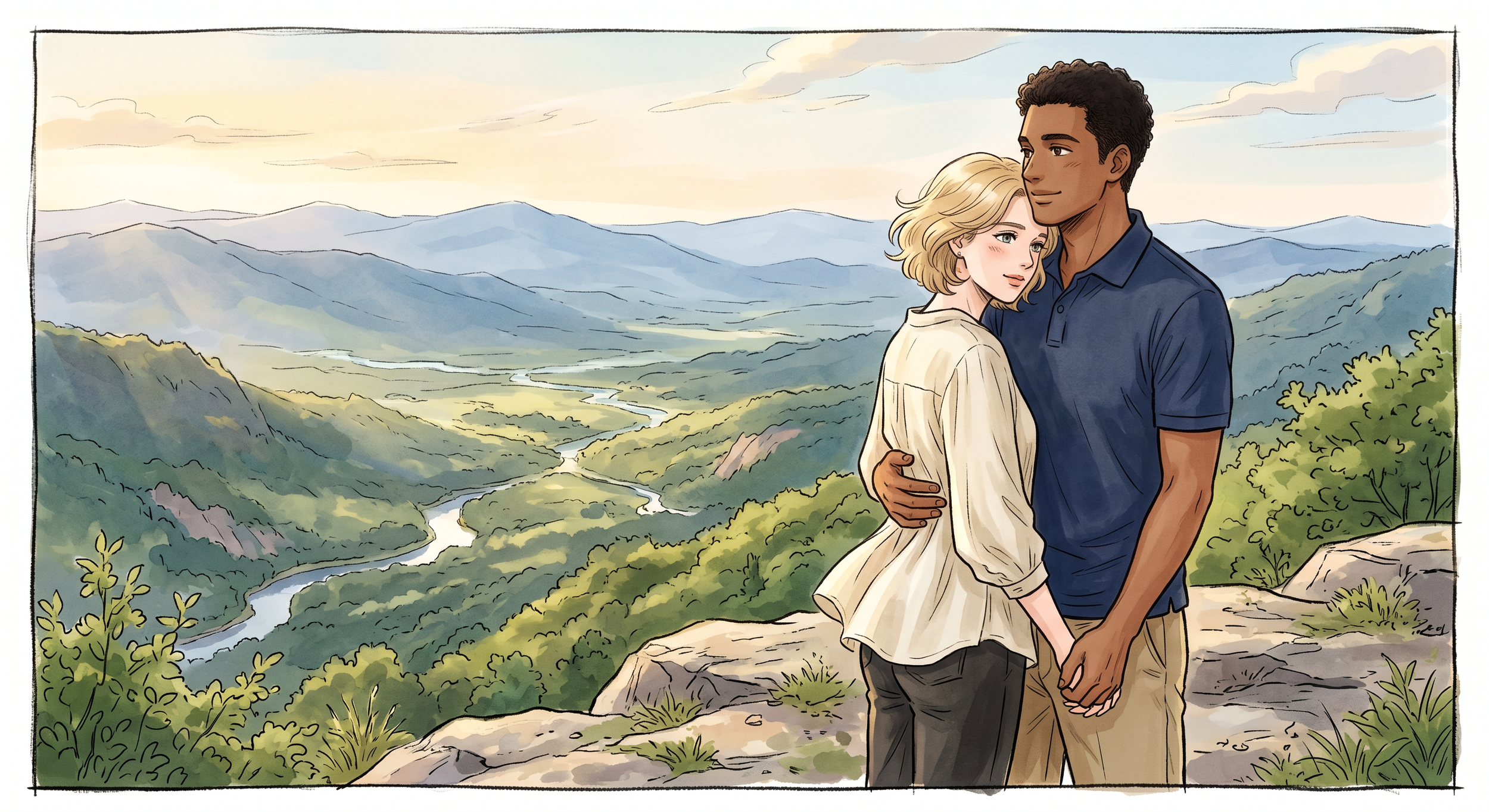
The air in this high country is thin, brittle as vintage silk, and shimmering with the quietude of a bell that has already been struck. For so long, we were architects of the invisible. We followed the maps of the great developmentalists, climbing the rungs of Kegan’s scaffolding until our identities became fluid, translucent, and finally, unnecessary. We shed the skin of the individual for the inter-individual, moving through the world not as solid objects, but as a series of resonant echoes. We bathed in the coral light of a consciousness that knows no borders, a state so integrated that the "I" became a mere whisper in a cathedral of "We."
We reached the peak of enlightenment—that sterile, sun-bleached plateau where the self evaporates into the absolute. It was magnificent, yes. It was the white-on-white of a minimalist gallery, a space of profound absence where the pulse of the universe beats in a rhythmic, unceasing void. We became the mysticism we once studied; we were the salt doll dissolving into the sea, the flame losing itself to the sun. But then, something curious happened in the silence.

Beyond the final stage of the spiral, past the reach of the most ancient sutras, we found ourselves standing on the other side of "everything." And there, in that post-spiritual morning, we discovered a love that does not require a pedestal. It is a love that exists after the mirrors have been broken. It is not the feverish, grasping hunger of the ego, nor is it the detached, universal compassion of the saint. Instead, it is something more exquisite: a second innocence. It is the discovery of the other as a person, not a projection, not a soul-contract, not a mirror of the divine—but simply a presence.
To love past enlightenment is to choose the finite over the infinite. It is to look at the curve of a shoulder, the specific amber of an eye, or the way a hand rests upon a linen sheet, and to find it more compelling than the void. We have returned from the heights to the garden, trading the blinding light of the one for the soft, dappled shade of the two. In this space, love is not a tool for growth or a path to transcendence. It is the destination. I
t is the elegance of being fully known by someone who has also walked through the fire and come out the other side, stripped of pretension. We no longer need to be "at-one" with the cosmos; we are content to be "at-home" in the quiet hum of a shared afternoon. There is a profound, quiet luxury in this. It is the couture of the spirit—tailored, intimate, and deeply felt. Having mastered the art of letting go, we find that the most radical act is to finally, gently, hold on. We have moved past the mysticism of the stars and found, at last, the holiness of the skin.